
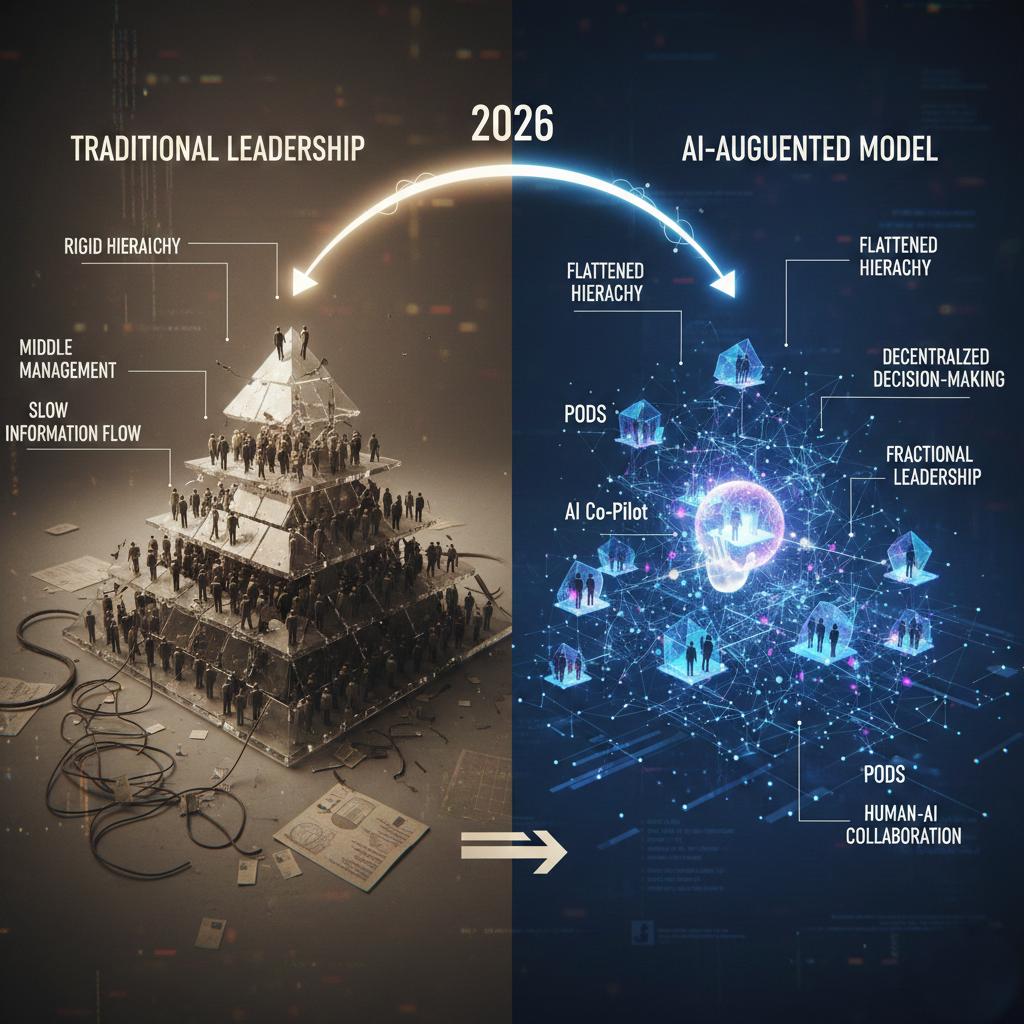
A quiet shift is happening in boardrooms across America. Today, artificial intelligence is no longer just a support tool. Instead, it shapes how leaders think, decide, and act.
If you sit in the C-suite or lead product teams, you feel this change. Markets move faster than ever. Meanwhile, data grows by the second. As a result, stakeholders expect quicker and smarter decisions.
So what is AI leadership? More importantly, how is AI redefining leadership in real organizations?
Let us break this down in simple terms.
What Is AI Leadership?
At its core, AI leadership means using intelligent systems to guide strategy while keeping human judgment at the center.
In other words, machines provide insight, but leaders remain responsible for final decisions.
Rather than replacing executives, smart tools help them see patterns, test ideas, and reduce blind spots.
Strong AI leaders:
Study data carefully
Act with intention
Test ideas before risk grows
Protect ethical standards
Therefore, this shift is not about hype. Instead, it represents a structural change from top-down control to insight-driven guidance.
How AI Is Changing Leadership
Across U.S. companies, five clear shifts are emerging.
First, decisions move faster. In the past, reports took weeks. Now, dashboards update in real time. Consequently, executives act before problems escalate.
Second, strategy becomes predictive. Instead of reacting to market shifts, leaders use forecasting models to anticipate demand, revenue trends, and hiring needs.
Third, talent management evolves. HR teams now rely on analytics to detect burnout, map skills, and personalize training. Because of this, workforce planning becomes more precise.
Fourth, risk control improves. Intelligent systems scan contracts and compliance logs for red flags. As a result, governance becomes sharper.
Finally, influence scales faster. Leaders now create content, analyze trends, and shape industry narratives with greater speed. This shift directly impacts how to create thought leadership content with AI at scale.
If you want a deeper look at executive decision evolution, read:
https://alltipsmedia.com/how-ai-is-changing-executive-decision-making-models/
How Is AI Redefining Leadership in Real Terms?
Traditionally, leadership relied on hierarchy.
However, data-driven systems flatten information flow.
Previously, leaders decided while teams executed. Reports moved upward slowly.
Today, dashboards display live insights across departments. Therefore, teams access information directly and act faster.
Because of this transparency, executives become interpreters of insight rather than simple directors of action.
Authority does not disappear. Instead, it becomes more informed.
How to Use AI in Leadership Without Losing Judgment
Many executives fear losing the human side of leadership. That concern is valid.
However, the answer lies in balance.
Use technology to analyze data.
Use it to simulate scenarios.
Use it to test assumptions.
Yet always keep moral judgment human.
For further guidance, explore:
https://alltipsmedia.com/how-leaders-can-use-ai-without-losing-human-judgment/
A simple framework helps:
Define the goal clearly.
Gather clean data.
Run intelligent analysis.
Review insights carefully.
Decide with wisdom.
In short, systems support thinking, but they should never replace responsibility.
Now I will fix your second half with better transitions and sentence flow.
Replace from “How to Create Thought Leadership Content With AI” to the end with this:
How to Create Thought Leadership Content With AI
Today, executives and founders often ask how to create thought leadership content with AI without sounding robotic.
The key is collaboration.
First, use intelligent tools to analyze trends and identify gaps. Next, generate structured outlines. After that, add real case studies and lived experience.
Because authenticity builds trust, your voice must remain central.
AI speeds up research. However, human insight builds authority.
If you want scalable frameworks, explore:
https://alltipsmedia.com/ai-leadership-frameworks-for-forward-thinking-companies/
How to Ensure Thought Leadership in AI Responses
Generic content weakens credibility.
Therefore, to ensure thought leadership in AI responses, refine every draft carefully.
Add original data.
Include real client stories.
Cite relevant numbers.
Take clear positions.
Instead of publishing raw output, strengthen it with perspective.
How to Present AI Knowledge Platform Benefits to Company Leadership
When pitching an AI solution internally, clarity matters.
So how to present AI knowledge platform benefits to company leadership effectively?
Focus on measurable impact.
For example:
Manual analysis: 15 hours per week
Automated analysis: 2 hours per week
Time saved: 13 hours weekly
Because boards think in ROI, translate time into cost savings and growth.
Clear numbers build confidence.
Ethical Considerations of Using AI in Leadership
Every innovation carries risk.
Therefore, leaders must examine ethical considerations carefully.
Major concerns include:
Data bias
Privacy protection
Transparency in decisions
Over-monitoring employees
Clear accountability
If ignored, these risks damage long-term trust.
However, when addressed early, ethical frameworks strengthen brand equity.
Practical AI Leadership Roadmap
To move forward responsibly:
Audit current systems.
Train leadership teams.
Create governance policies.
Pilot tools carefully.
Measure results consistently.
Because purpose drives progress, do not chase trends blindly.
The Human Core Still Wins
Despite technological power, human traits remain essential.
Empathy builds trust.
Courage drives vision.
Integrity sustains culture.
While systems enhance intelligence, emotional wisdom still defines leadership.
The strongest executives combine both.
Final Thoughts
AI is reshaping traditional leadership structures across industries.
However, technology alone does not define success.
Instead, how leaders apply it determines long-term impact.
If you want practical strategies and executive-ready frameworks, explore our leadership AI resources on AllTipsMedia.
Strengthen your strategy.
Sharpen your influence.
Lead with clarity and responsibility.
The future will reward those who act wisely.