
You have a great story.
You hit send.
No reply.
This hurts.
And it happens a lot.
Most times, the problem is not your story.
The problem is the format.
Journalists see hundreds of emails each day.
They decide fast.
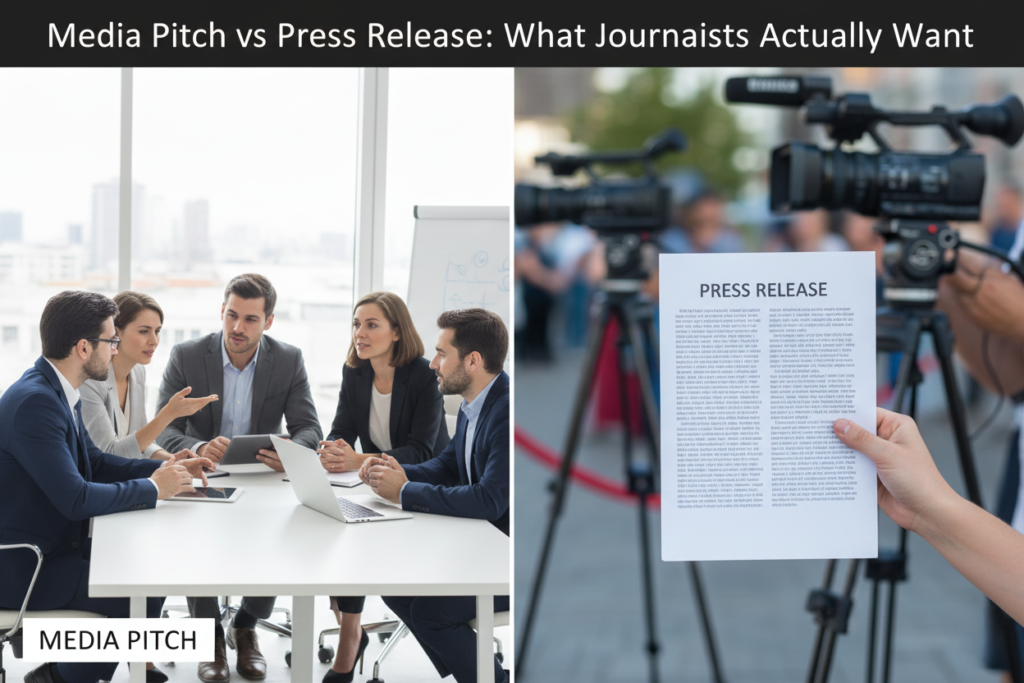
This guide explains media pitch vs press release in plain words.
You will learn what journalists want, when to pitch, and when to send a press release.
If you are a business owner, startup founder, marketer, or PR student, this guide will save you time and stress.
Why Journalists Ignore Most Emails
Journalists want help.
Not hype.
They ask one question when they open an email.
Is this useful for my readers?
If the answer is not clear in seconds, they move on.
That is why format matters.
What a Press Release Really Is
A press release shares news.
It tells a full story.
It answers:
What happened
Who is involved
Where it happened
When it happened
Why it matters
Press releases work best for:
Company news
Product launches
Awards
Growth updates
They support long-term local press releases and media coverage when done right.
What a Media Pitch Really Is
A media pitch is personal.
It is short.
It is direct.
A pitch is written for one journalist.
Not for everyone.
It explains:
Why this story fits them
Why it fits now
Why their audience will care
A good pitch feels helpful, not salesy.
Media Pitch vs Press Release Explained Simply
Here is the core idea.
A press release explains news.
A media pitch starts a conversation.
That one line explains media pitch vs press release clearly.
When a Press Release Works Best
Use a press release when:
You have official news
You want broad coverage
You want online visibility
Press releases also work well with search engines.
They help build trust over time.
When a Media Pitch Works Best
Use a pitch when:
You want a specific journalist
You have a unique angle
You want a story, not just a mention
Pitches work best when they feel human.
Media Advisory vs Press Release vs Pitch
People mix these tools often.
A press release tells a story.
A media advisory invites media to attend an event.
A pitch asks for interest.
Knowing media advisory vs press release helps you choose the right tool.
Press Release vs Media Advisory: Quick Reminder
Use a press release for news.
Use a media advisory for events.
This simple rule saves time.
Media Alert vs Press Release: One More Difference
A media alert is very short.
It signals urgency.
Use it for:
Breaking news
Last-minute events
This explains media alert vs press release clearly.
How Journalists Want You to Pitch Them
Journalists want respect.
That means:
Use their name
Know their beat
Keep it short
A good pitch feels like help, not spam.
How to Send Press Release to Local Media the Right Way
Before pitching, send your press release.
Local media still matters.
They care about local stories.
Follow these steps:
Find local outlets
Match your story
Send during work hours
This is the right way to send press release to local media.
How to Send a Press Release to Local Media Without Mistakes
Many people send one email to everyone.
That fails.
Always:
Target the right outlet
Write a clear subject
Add contact details
This matters when learning how to send a press release to local media correctly.
How to Submit a Press Release to Local Media
Some outlets use forms.
Others want email.
Before you submit:
Read guidelines
Follow limits
Use clean format
This is the correct way to learn how to submit a press release to local media.
Press Releases and Social Media: Do Not Separate Them
Press releases need support.
When you share them online:
More people see them
Journalists notice buzz
Your brand looks active
That is why press releases and social media work best together.
What Is a Social Media Press Release
A social media press release is a short version of your news.
It is built for sharing.
It includes:
One key point
One benefit
One link
This makes social media press release sharing easy.
Press Release on Social Media: Best Practice
Do not paste the full text.
People scroll fast.
Instead:
Share one strong line
Add a clean image
Link to the full release
This is how a press release on social media performs well.
Writing a Press Release Social Media Post That Gets Clicks
A good post answers one thing.
Why should I care?
Use:
Short words
Clear value
Direct action
A strong press release social media post invites clicks.
Social Media Press Releases for Growth
Social sharing helps:
Small businesses gain trust
Startups gain eyes
Brands gain voice
When done right, social media press releases support growth without big spend.
Social Media Press Release Examples That Journalists Notice
Good examples share traits:
Clear angle
Local focus
Real value
Strong social media press release examples feel useful, not loud.
Media Press Release and Authority
A media press release is written for journalists.
But it also helps online.
It builds:
Trust
Backlinks
Search value
This makes every media press release a long-term asset.
Why a Press Release Media Kit Helps Pitches
Journalists want fast facts.
A media kit includes:
Company bio
Images
Logos
Contact info
A clean press release media kit saves time and improves reply rates.
Simple Comparison Chart
Tool | Best Use | Goal
Press release | Official news | Coverage
Media pitch | Personal outreach | Story
Media advisory | Events | Attendance
Media alert | Urgent news | Speed
This chart helps you choose fast.
Learn More Through Our Collection Pages
To sharpen your PR skills, explore these helpful pages:
Learn how to send press releases correctly
https://alltipsmedia.com/how-to-send-a-press-release-to-local-media-alltipsmedia/
See how social media boosts press releases
https://alltipsmedia.com/press-releases-and-social-media-guide-alltipsmedia/
Understand alerts vs releases clearly
https://alltipsmedia.com/media-alert-vs-press-release-guide-alltipsmedia/
These collection pages help brands communicate better.
Frequently Asked Questions
Do journalists prefer pitches or press releases?
They prefer pitches for stories and releases for official news.
Should I send both?
Yes. Use the press release first, then pitch.
Can small businesses pitch journalists?
Yes, if the story is useful and local.
Should I follow up on pitches?
Yes, once. Keep it polite.
Does social media help pitching?
Yes. It shows interest and activity.
Final Thoughts
Journalists do not want noise.
They want value.
When you understand the difference between a pitch and a press release, your success rate improves fast.
You save time.
You get replies.
Choose the right tool.
Use it with care.
Stay human.
If you want stronger media results, explore our collection pages today and take the next step with confidence.