You wrote the news.
You hit send.
No reply.
This happens to many businesses.
The problem is not your story.
The problem is the tool you used.
Many people mix up press releases and media advisories.
They sound alike.
But they work very differently.
This guide explains the real difference between a media advisory vs press release, using clear words and real examples.
By the end, you will know what to send, when to send it, and how to get noticed faster.
This blog is for business owners, startups, marketers, PR teams, and writers who want real media attention in the USA.
Why This Difference Matters So Much
Journalists are busy.
They scan emails fast.
If you send the wrong format, they ignore it.
If you send the right one, they open it.
That is why knowing the difference saves time, money, and effort.
What Is a Press Release
A press release tells a story.
It explains news in detail.
It answers:
What happened
Why it matters
Who is involved
Where it happened
How it helps people
A press release works best for:
Product launches
Company updates
Awards
Business growth news
This format supports strong local press releases and media coverage when written well.
What Is a Media Advisory
A media advisory is short.
Very short.
It acts like an invite.
Not a story.
It tells journalists:
What is happening
When and where
Who should attend
Why it matters
Media advisories work best for:
Events
Press conferences
Store openings
Community programs
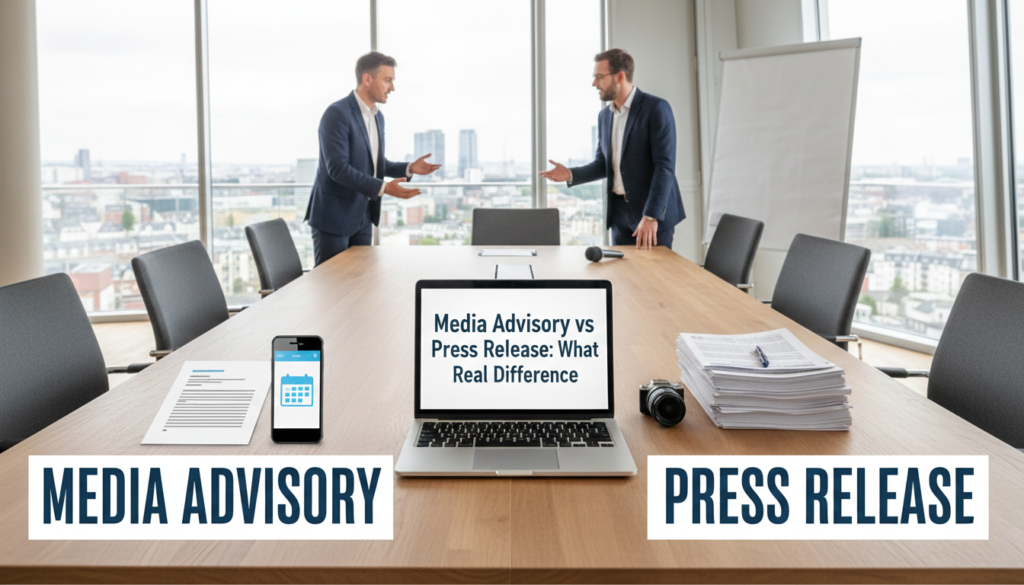
Media Advisory vs Press Release Explained Simply
Here is the main difference.
A press release explains news.
A media advisory invites media.
That is the core idea behind media advisory vs press release.
Press Release vs Media Advisory: When to Use Each
Use a press release when:
You want coverage
You share full news
You want online visibility
Use a media advisory when:
You want reporters present
You host an event
You need fast attention
Knowing press release vs media advisory helps you choose the right path.
Media Alert vs Press Release: Not the Same Thing
A media alert is even shorter than an advisory.
It signals urgency.
Use it for:
Breaking news
Last-minute updates
This is the key difference in media alert vs press release.
Media Pitch vs Press Release: What Gets Replies
A press release is formal.
A media pitch is personal.
A pitch is a short message written just for one journalist.
It explains why the story fits them.
Use both together for best results.
This balance explains media pitch vs press release clearly.
How to Send Press Release to Local Media the Right Way
Many people fail here.
They write well.
But they send it wrong.
Step 1: Find the Right Outlet
Look for local news sites
Search reporter names
Check contact pages
Step 2: Write a Clear Subject Line
Keep it short
Make it local
Show value
Step 3: Send at the Right Time
Morning works best
Weekdays get more reads
This is how to send press release to local media properly.
How to Submit a Press Release to Local Media
Some outlets accept uploads.
Others want email only.
Before you send:
Read rules
Follow limits
Add contact details
This step is key when learning how to submit a press release to local media.
Press Releases and Social Media Work Better Together
A press release should not live alone.
When you share it on social platforms:
More people see it
Journalists notice buzz
Search visibility improves
That is why press releases and social media should work as a team.
What Is a Social Media Press Release
A social media press release is a short version of your news.
It is built for sharing.
It includes:
One strong line
A clear link
A simple image
This method makes social media press release promotion easy.
Press Release on Social Media: Best Practices
Do not paste the full text.
That never works.
Instead:
Share one benefit
Add a strong hook
Link to the full story
This improves every press release on social media.
Writing a Press Release Social Media Post That Works
Good posts are simple.
They show:
Why it matters
Who it helps
What to do next
A strong press release social media post drives clicks.
Social Media Press Releases for Brand Growth
Social platforms help news travel.
Use:
Pinned posts
Short videos
Quick updates
These tools turn social media press releases into traffic drivers.
Social Media Press Release Examples That Perform Well
Good examples follow simple rules:
Short headlines
Local angle
Clear benefit
Strong social media press release examples avoid hype.
Media Press Release for Authority and Trust
A media press release is built for journalists first.
It uses:
Facts
Quotes
Clear sources
This format builds trust and strengthens any media press release.
Why a Press Release Media Kit Matters
Journalists want fast access.
A media kit includes:
Company bio
Logos
Images
Contact info
A clean press release media kit increases your chances of coverage.
Simple Comparison Chart
Tool | Best Use | Goal
Press release | Company news | Coverage
Media advisory | Events | Attendance
Media alert | Urgent news | Fast action
Media pitch | Follow up | Replies
This chart makes planning easier.
Use Our Collection Pages to Grow Faster
If you want your news seen by the right audience, explore our trusted collections.
Stay updated with tech and business press releases
https://alltipsmedia.com/latest-tech-news-press-releases-alltipsmedia/
Boost reach using sponsored posts and social media exposure
https://alltipsmedia.com/social-media-tips-sponsored-posts-alltipsmedia/
Get visibility through innovation and technology coverage
https://alltipsmedia.com/technology-news-press-releases-alltipsmedia/
These collection pages help brands get noticed faster.
Frequently Asked Questions
Is a media advisory better than a press release?
No. Each serves a different purpose.
Can small businesses use media advisories?
Yes, especially for local events.
Should I post press releases on social media?
Yes. It increases reach and trust.
How long should a press release be?
One page is enough.
Do journalists still read press releases?
Yes, if they are clear and relevant.
Final Thoughts
Media attention is not random.
It is planned.
When you know the difference between advisories, releases, alerts, and pitches, results come faster.
Choose the right tool.
Send it the right way.
Stay consistent.
If you want better reach, stronger trust, and real media coverage, explore our collection pages today and move forward with confidence.