Leaders are under pressure. Markets move fast. Teams expect answers now. The question is simple. Who leads when AI joins the room?
AI conversation bots are no longer tools. They are shaping how leaders think, speak, and act. This guide shows how AI is redefining leadership, how to use it well, and how to stand out with real thought leadership content.
What Is AI Leadership and Why It Matters Now
What is AI leadership?
AI leadership is the skill of using artificial intelligence to guide people, decisions, and growth with care and purpose. It blends human judgment with smart systems.
Leaders use AI to listen at scale, test ideas fast, and learn from data in real time. When done right, AI helps leaders lead with clarity, not noise.
How AI Is Changing Leadership at the Top
AI is changing leadership in five clear ways.
- Speed: Leaders get insights in minutes, not months.
- Clarity: Bots summarize risk, trends, and options.
- Reach: One leader can support many teams at once.
- Learning: Leaders train with AI driven roleplays for leadership training.
- Voice: Leaders publish sharper points with AI support.
This shift is not about replacing people. It is about helping leaders show up better.
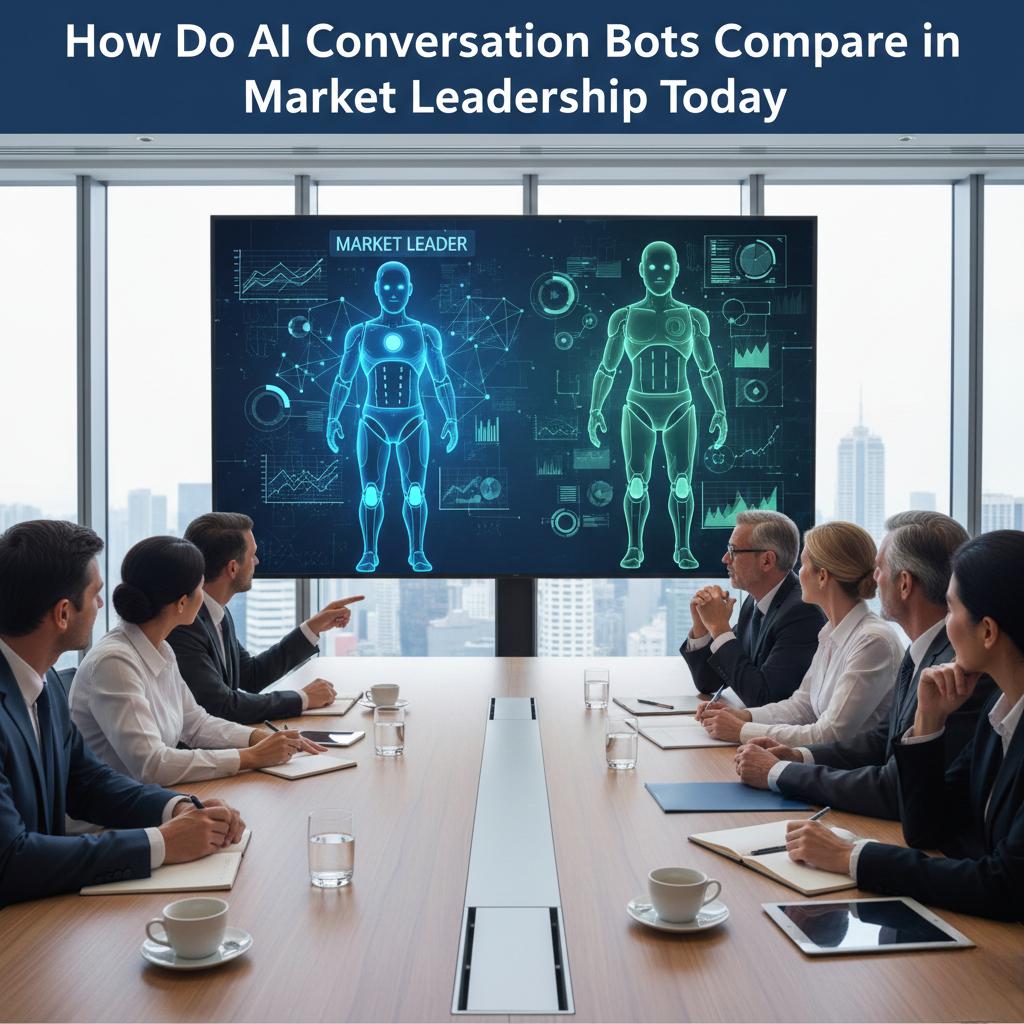
How Do AI Conversation Bots Compare in Market Leadership
AI conversation bots now lead the field in decision support and voice at scale. But not all bots lead the same way.
Simple Comparison Table
| Feature | Basic Chatbots | Advanced AI Conversation Bots |
|---|---|---|
| Context memory | Low | High |
| Strategy support | Limited | Strong |
| Leadership insights | Weak | Deep |
| Ethical controls | Minimal | Built in |
| Roleplay training | No | Yes |
Takeaway: Advanced AI conversation bots compare strongly in market leadership because they support judgment, not just answers.
How Is AI Redefining Leadership Communication
Leadership today is public. It lives on LinkedIn, town halls, and board decks. AI helps leaders shape ideas with care.
- Draft clear points in plain words
- Test messages before sharing
- Adapt tone for teams, boards, or clients
This is how leaders ensure thought leadership in AI responses. They guide the bot. The bot does not guide them.
How to Create Thought Leadership Content With AI
Strong thought leadership content starts with truth. AI helps you get there faster.
A simple process leaders use
- Start with a real problem your team faces.
- Ask AI for patterns, not opinions.
- Add your story and stance.
- Edit for simple words and short lines.
- Publish with confidence.
For a deeper guide, read this internal resource: How to Create Thought Leadership Content With AI That Builds Real Authority
How to Ensure Thought Leadership in AI Responses
AI can sound smart but empty. Leaders avoid this by staying in charge.
Do this every time
- Set the point of view first.
- Ask the bot to challenge you.
- Remove jargon.
- Keep sentences short.
- End with a clear action.
Thought leadership lives in choices. AI just helps you see them.
How to Use AI in Leadership Training
Many teams now ask, is it best AI driven roleplays for leadership training? For many cases, yes.
AI roleplays let leaders practice hard talks safely. They can test feedback, conflict, and change talks. They can fail fast and learn faster.
This builds calm leaders who act with care.
How to Present AI Knowledge Platform Benefits to Company Leadership
Boards and exec teams want clear value. Not hype.
Present benefits like this
- Start with the business goal.
- Show time saved or risk reduced.
- Share one clear case study.
- Explain how people stay in control.
This approach earns trust and speeds approval.
How Do AI Conversation Bots Drive Market Leadership
Market leaders do three things better with AI bots.
- They listen wider. Bots scan signals across teams and markets.
- They decide faster. Leaders see options clearly.
- They speak with one voice. Messages stay clear and aligned.
This is why AI conversation bots compare so well in market leadership today.
Ethical Considerations of Using AI in Leadership
Ethics are not optional. Leaders must lead here too.
Key ethical considerations of using AI in leadership
- Data privacy and consent
- Bias checks and audits
- Clear human oversight
- Honest disclosure of AI use
Strong leaders set rules first. Tools come second.
A Simple Chart Leaders Use to Decide
When to Use AI vs Human Judgment
| Situation | AI Support | Human Lead |
|---|---|---|
| Data analysis | High | Medium |
| People decisions | Low | High |
| Training practice | High | Medium |
| Public values | Low | High |
Rule: Use AI for insight. Use humans for values.
How AI Is Changing Leadership Culture
AI changes culture by shaping habits.
- Teams ask better questions.
- Leaders share drafts early.
- Learning becomes daily.
This creates open, learning led companies.
For related insights on digital impact, explore: How Social Media Affects Mental Health and What Is Social Media Marketing Strategy .
Final Take: Lead With AI, Not Behind It
AI is here. Silence is a choice. So is leadership.
Leaders who act now build trust, speed, and voice. They create thought leadership content with AI that feels human. They train better. Decide faster. Speak clearer.
Call to action: Explore our collection pages to learn how All Tips Media helps leaders use AI with purpose. Start leading the conversation today.
Frequently Asked Questions
What is AI leadership in simple terms
AI leadership means using AI to support decisions while humans stay in control of values and people.
How do AI conversation bots compare in market leadership
Advanced bots lead because they add context, insight, and training support, not just answers.
Is it best AI driven roleplays for leadership training
For practice and feedback, AI roleplays work well and reduce risk.
How to ensure thought leadership in AI responses
Set the point of view first. Edit for clarity. Keep humans in charge.
What are the ethical considerations of using AI in leadership
Privacy, bias, oversight, and honesty are the core concerns leaders must manage.